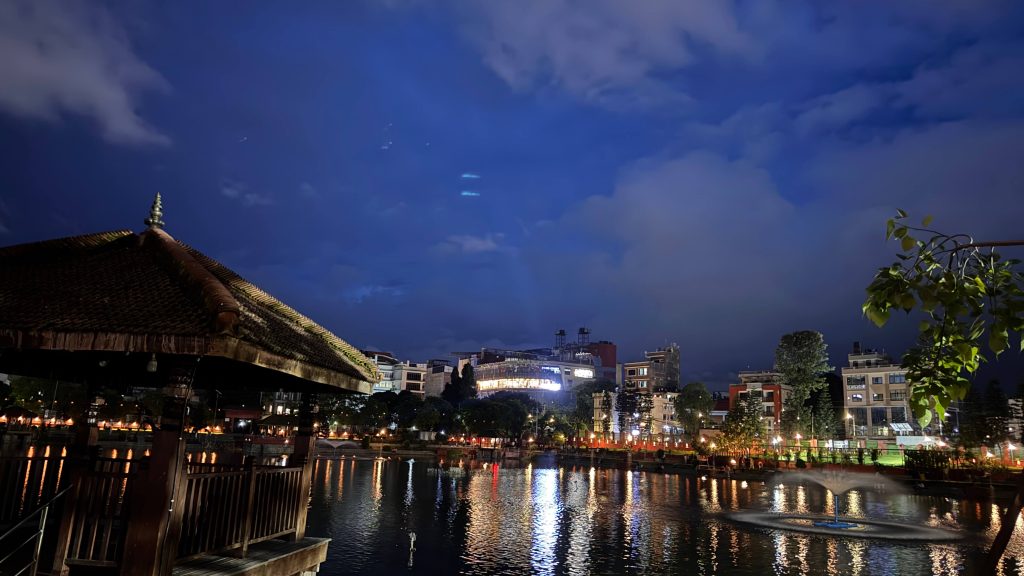
The Historic Lotus Pond
Situated in Ward No. 1 at the vibrant crossroads of Kamaladi, Hattisar, Putalisadak, and Dillibazar—just a comfortable walking distance from Thamel—Kamal Pokhari (literally “Lotus Pond”) is one of central Kathmandu’s most transformed urban heritage landmarks. Once heavily polluted and encroached upon, the pond has undergone a complete metamorphosis through Kathmandu Metropolitan City’s revitalization efforts. Today, featuring illuminated water fountains (fohora), paved lakeside pathways, and open public spaces, it stands as a bustling hub for morning walkers, youth tea/coffee gatherings, photography, and social content creators.
Quick Facts and Key Information
Location: Kamal Pokhari Marg, Ward No. 1, Kathmandu, Bagmati Province, Nepal
Name Etymology: Kamal (Lotus) + Pokhari (Pond)
Key Visual Feature: Evening illuminated water fountain (Fohora) displays
Visiting Hours: Listed daily from 6:00 AM to 8:00 PM (Free public entry)
Major Annual Festival: Chhath Mahaparva (Grand Sun Worship and Evening Arghya)
Surrounding Scene: Walking distance from Thamel, surrounded by new cafes, restaurants & local tea spots
Urban Transformation, Water Fountains & Youth Culture
For years, Kamal Pokhari suffered from severe pollution, water stagnation, and urban neglect. However, dedicated rejuvenation projects by the Kathmandu Metropolitan City have completely changed the face of the area into a pristine, beautifully maintained ecological and recreational public park.
A major highlight of the restored pond is the evening water fountain (Fohora) display. As dusk sets in, the dynamic fountains combined with ambient decorative lighting create a stunning visual spectacle reflecting across the water, making the location a trending destination for evening photography, short videos, TikTok, and Instagram reels among locals and international travelers alike.
The well-paved walking pathways surrounding the pond buzz with life from dawn to dusk. In the early morning, local residents flock to the promenade for jogging, yoga, and fresh air. Throughout the day and evening, groups of youths, college students, and officegoers gather along the benches and pathways for relaxation, lively conversations, and tea/coffee. The entire perimeter has also seen a boom in modern dining, with numerous multi-cuisine restaurants, bakeries, and cozy cafes opening up alongside traditional eateries.
Routes and Transportation Options
By Foot: Kamal Pokhari is exceptionally accessible. It is just a 15-minute walk from Thamel, an 8-minute walk from Kamaladi, and a 5-minute walk from Putalisadak or Krishna Pauroti Chowk.
By Public & Ride-Share Transit: City buses, microbuses, and electric safas frequently stop right at Kamal Pokhari Chowk and Putalisadak. Ride-sharing apps (Pathao, InDrive, Yatri) and local taxis provide hassle-free drop-offs directly at the park gates.
Frequently Asked Questions
When does the water fountain (fohora) operate?
The illuminated fountain displays operate primarily during the evening hours around sunset, creating an atmospheric reflection on the water.
Is Kamal Pokhari walkable from Thamel?
Yes, it is approximately 1.2 km east of Thamel (about a 15-minute walk via Tridevi Marg and Kamaladi), making it an easy side-trip for tourists.
Is there an entry fee to enter Kamal Pokhari Park?
No, entry to Kamal Pokhari Park is free and open to the public daily from 6:00 AM to 8:00 PM.